

The Ripple Effect on Food and Beverage Manufacturing
How rising fuel prices affect the supply chain, manufacturers, and the cost of doing business — and how Fruition is working to protect its customers from unnecessary price increases.
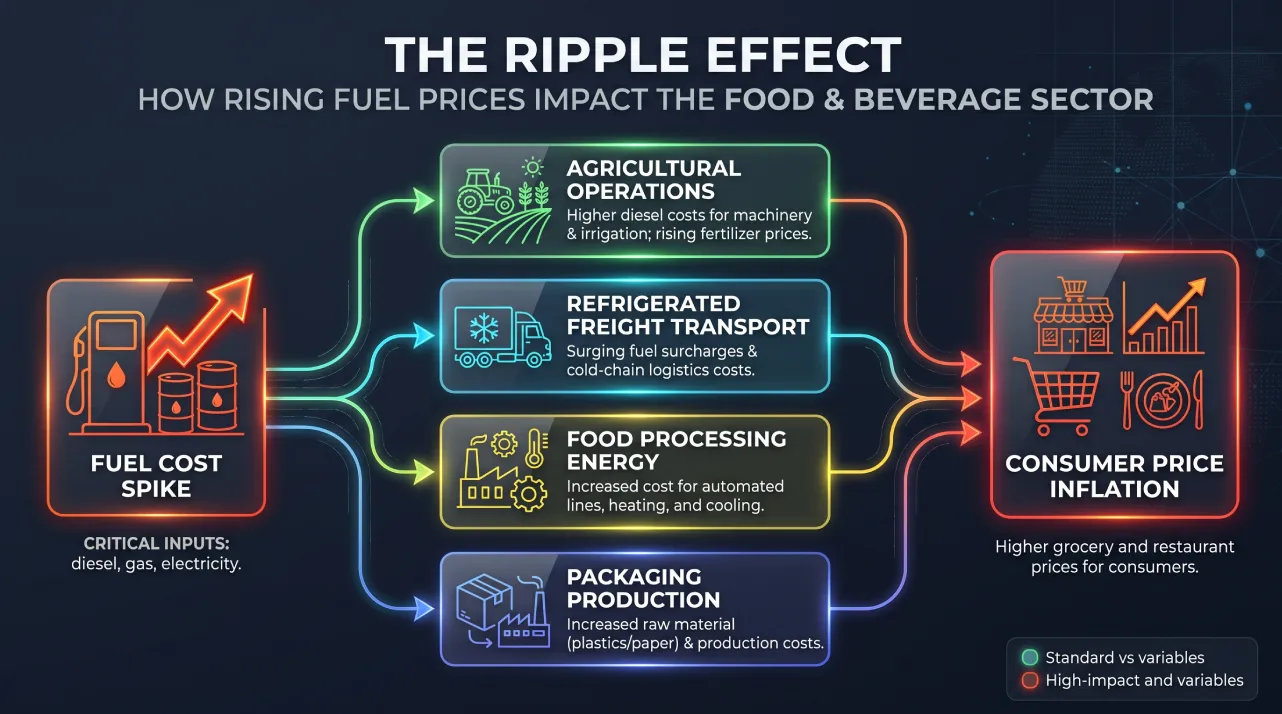
South African businesses are once again facing mounting pressure as fuel prices rise, placing additional strain on operating costs across almost every industry. While the immediate impact is felt at the petrol station, the consequences extend much further, affecting agriculture, transportation, raw material suppliers, food and beverage manufacturers, and ultimately the prices paid by consumers.
For the food and beverage manufacturing sector, fuel is more than an expense associated with transporting finished products. It influences the cost of bringing raw materials into factories, moving ingredients between suppliers, operating production facilities and delivering products to customers.
At Fruition, we understand that these pressures affect our entire supply chain, including our customers, many of whom are also small and medium-sized businesses working hard to manage their own costs.
As a South African manufacturer supplying liquid flavours and other solutions to the food and beverage industry, we believe it is important to be transparent about these challenges, explain how they affect our business and share how we are working to manage rising costs responsibly.
Our approach is simple: we aim to implement one annual price increase and absorb additional cost pressures wherever reasonably possible, rather than passing every increase directly on to our customers.


1. Rising fuel costs affect more than motorists
Fuel plays a significant role in South Africa’s economy, particularly because road transport is central to moving goods between farms, suppliers, manufacturers, distribution centres, and retailers.
The fuel price increases that took effect on 7 October 2026 have added further pressure to businesses already managing higher operating expenses. These increases create a ripple effect. When transport companies pay more for diesel, their operating costs rise. They may then need to adjust their delivery rates to remain sustainable. Businesses relying on these transport services must either absorb the additional expense or find ways to recover it.
The impact does not stop there. Suppliers may also face higher costs when importing ingredients, purchasing packaging, sourcing agricultural products or distributing materials to manufacturing facilities.
For food and beverage manufacturers, these pressures can accumulate across multiple stages of the production process.
Even businesses that do not operate their own delivery fleets are affected because the products, ingredients and services they purchase have often travelled through several parts of the supply chain before reaching them.
2. How rising fuel costs affect food and beverage manufacturing
Food and beverage manufacturing depends on a complex network of suppliers and service providers. Every ingredient, container, label and finished product has a cost associated with producing and moving it.
When fuel prices rise, several areas of manufacturing can be affected.
Raw material procurement
Ingredients used in food and beverage production may be sourced locally or internationally. In both cases, transportation contributes to the final cost.
Locally sourced ingredients must be transported from farms, processors or warehouses to manufacturing facilities. Imported ingredients may involve shipping, port handling, inland transport and additional distribution costs.
When these expenses increase, raw material suppliers may revise their pricing to reflect the additional costs of sourcing and delivering their products.
For manufacturers, this can mean paying more for the same ingredients without necessarily receiving any additional value or being able to increase their own selling prices immediately.
Packaging and production supplies
Packaging is another important part of the manufacturing cost structure. Bottles, caps, drums, jerry cans, labels and other production materials all need to be manufactured and transported.
Higher fuel prices can influence the cost of moving these materials and may contribute to increases elsewhere in the packaging supply chain.
The same applies to cleaning supplies, maintenance materials and other consumables required to keep a production facility running.
Individually, these increases may appear manageable. However, when several suppliers adjust their prices at the same time, the combined effect can become substantial.
Deliveries and distribution
Once a product has been manufactured, it still needs to reach the customer.
Whether products are delivered directly, collected by customers or transported through a third-party logistics provider, fuel costs remain an important consideration.
Longer delivery distances, smaller consignments and multiple delivery points can make transportation particularly expensive. When freight rates increase, manufacturers must review how they manage deliveries and how these costs fit into their overall pricing.
According to reporting by Business Day in October 2026, fuel can account for approximately 35% to 55% of operating costs for logistics companies, depending on the operation. This helps illustrate why significant diesel increases can put pressure on transport rates and the wider supply chain. Source: Business Day.
3. The additional pressure on small and medium-sized manufacturers
Large manufacturers may have greater purchasing power, more extensive distribution networks or the ability to negotiate long-term agreements with suppliers. Smaller businesses often have less flexibility.
For small and medium-sized enterprises (SMEs), managing rising costs is a balancing act between maintaining product quality, remaining competitive and protecting the long-term sustainability of the business.
An increase in raw material costs cannot always be passed directly on to customers. Existing agreements, customer budgets and competitive pressures may limit how quickly a business can adjust its prices.
At the same time, absorbing every increase indefinitely is not a sustainable solution.
Manufacturers must continue paying employees, maintaining equipment, meeting food safety requirements, managing quality control and investing in the resources needed to supply their customers reliably.
These are not optional expenses. They are essential to delivering products that meet the required standards.
For a business such as Fruition, the challenge is to balance these competing pressures while continuing to offer customers reliable service, consistent quality and products that meet their specific needs.
We also recognise that our customers face the same challenges. A beverage producer, sauce manufacturer or emerging food brand must manage its own ingredients, packaging, production, staffing and distribution costs.
Our customers need suppliers who understand this reality and work with them to find practical ways forward.
4. How rising costs affect Fruition
Fruition supplies liquid flavours and other tailored solutions to the food and beverage industry. Our products support manufacturers developing and producing beverages, sauces, syrups and other food applications.
Like every manufacturer, our cost base is influenced by several factors, including raw materials, packaging, transport, utilities, production and quality assurance.
Fuel price increases can affect Fruition both directly and indirectly.
Directly, higher transport costs may increase the expense of receiving raw materials and arranging deliveries. Indirectly, our suppliers may adjust their prices as they experience higher freight, distribution and operating expenses.
This is particularly important when ingredients are imported or when a specific raw material is available from only a limited number of suppliers.
If a supplier increases its price significantly, we must assess the impact on the finished product and determine whether the additional expense can reasonably be absorbed within our existing selling price.
The challenge is that these increases do not always happen once a year or at a predictable time. Supplier adjustments can occur throughout the year, while manufacturers must still honour existing pricing wherever possible.
As a business, we continually assess these pressures and look for ways to manage them without compromising product quality, food safety or the service our customers expect.
5. Our commitment to one annual price increase
At Fruition, we understand that frequent price increases make it difficult for our customers to budget, plan production and price their own products accurately.
For this reason, our aim is to implement one annual price increase wherever possible.
This approach gives customers greater predictability and helps them plan their purchasing and production costs with more confidence.
It also reflects our belief that a good supplier relationship is built on transparency, consistency and a shared understanding of the commercial realities affecting both businesses.
However, an annual pricing approach does not mean that costs remain stable throughout the year. Fuel prices, international markets, exchange rates, shipping expenses and raw material availability can all change unexpectedly.
When these changes occur, we first look at what we can manage internally.
We review the increases, assess their effect on our cost structure and consider whether there are practical ways to absorb them without compromising our ability to supply customers sustainably.
Our intention is not to pass every increase on to our customers. It is to absorb as much as we reasonably can and maintain stable pricing for as long as possible.
We believe this is an important part of being a responsible manufacturing partner, particularly when our customers are also working under increasing financial pressure.
6. When would Fruition consider an additional price increase?
While we aim to limit price adjustments to one annual increase, there may be exceptional circumstances when this is no longer possible.
The most significant concern is a substantial increase in raw material prices from our suppliers that we cannot reasonably absorb.
For example, if an essential ingredient experiences a sharp supplier price adjustment due to international market conditions, shipping disruptions or supply shortages, the impact may be too significant to carry within our existing pricing structure.
In such circumstances, we would need to evaluate the increase carefully and determine whether an additional price adjustment is necessary to maintain a sustainable supply.
Fruition will only consider sending an additional price increase if raw material suppliers increase their prices drastically and we are unable to absorb that increase.
This is not a decision we take lightly. Our preference remains to work within our annual pricing structure and avoid placing unnecessary pressure on our customers.
Where exceptional circumstances make a further adjustment unavoidable, transparency is important. Customers should understand the reason for the change and the external factors contributing to it.
Our objective is to make responsible pricing decisions that allow us to continue supplying quality products while protecting the long-term relationships we have built with our customers.
7. What manufacturers can do to manage rising costs
Although individual businesses cannot control international oil prices or supplier pricing decisions, there are practical steps that can help reduce the impact of rising costs.
Plan purchasing requirements. Sharing realistic forecasts with suppliers can help improve purchasing visibility and support better stock planning.
Review transport arrangements. Consolidating orders, coordinating collections and reviewing delivery schedules may help reduce unnecessary transport expenses.
Monitor key ingredients. Understanding which raw materials contribute most to production costs can help businesses identify where price changes are likely to have the greatest effect.
Maintain open communication with suppliers. Discussing cost pressures early allows both parties to explore practical solutions rather than reacting only when increases become unavoidable.
Plan ahead wherever possible. Better production and purchasing forecasts can help reduce last-minute orders, unexpected deliveries and avoidable disruptions.
At Fruition, we value working with customers who communicate their requirements and forecasts with us. This helps us plan raw material requirements and manage supply more effectively.
While these measures cannot eliminate the effects of rising fuel prices, they can help businesses make informed decisions and improve cost management across the supply chain.
8. Building resilience through partnership
Rising fuel prices are a reminder of how closely connected businesses are. A change in international oil prices can affect a transport provider, which can affect a raw material supplier, which can ultimately affect the manufacturer and the consumer.
For smaller manufacturers, navigating these changes requires careful financial management, operational flexibility and strong relationships with suppliers and customers.
At Fruition, we remain committed to finding the right balance between managing our costs responsibly and supporting the businesses that rely on us.
We cannot control every external cost increase, but we can control how we respond to it. We can review our expenses, plan ahead, communicate openly and make every reasonable effort to avoid passing unnecessary costs on to our customers.
Our commitment to one annual price increase reflects this approach. We will continue to absorb rising costs wherever possible, with an additional increase considered only when substantial raw material supplier increases make it unavoidable.
Moving forward together
The food and beverage industry will continue to face cost pressures as fuel prices, raw material markets and transport expenses fluctuate. These challenges affect businesses of every size, but they can be particularly demanding for SMEs that need to remain competitive while maintaining consistent quality.
At Fruition, we believe strong partnerships matter most during uncertain times.
We remain focused on supplying quality liquid flavours and tailored solutions to the food and beverage industry, while managing our own operating costs as carefully as possible.
Our commitment is simple: to work responsibly, communicate transparently and protect our customers from unnecessary price increases wherever we can.
Because doing business is not only about the product we supply. It is also about building relationships that last.
Taste to Fruition.
